D4 SURVEI PEMETAAN DAN
INFORMASI GEOGRAFIS
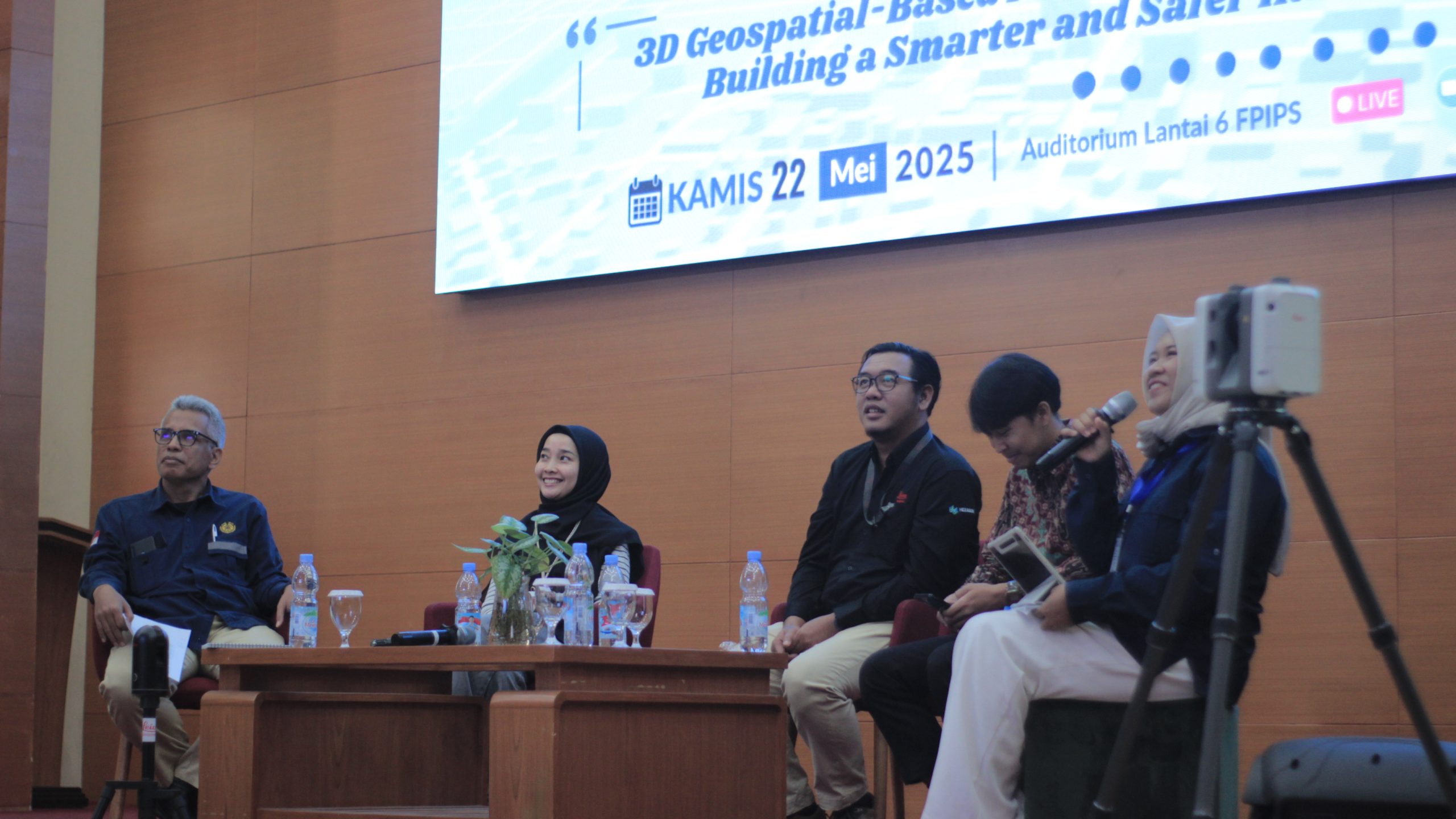
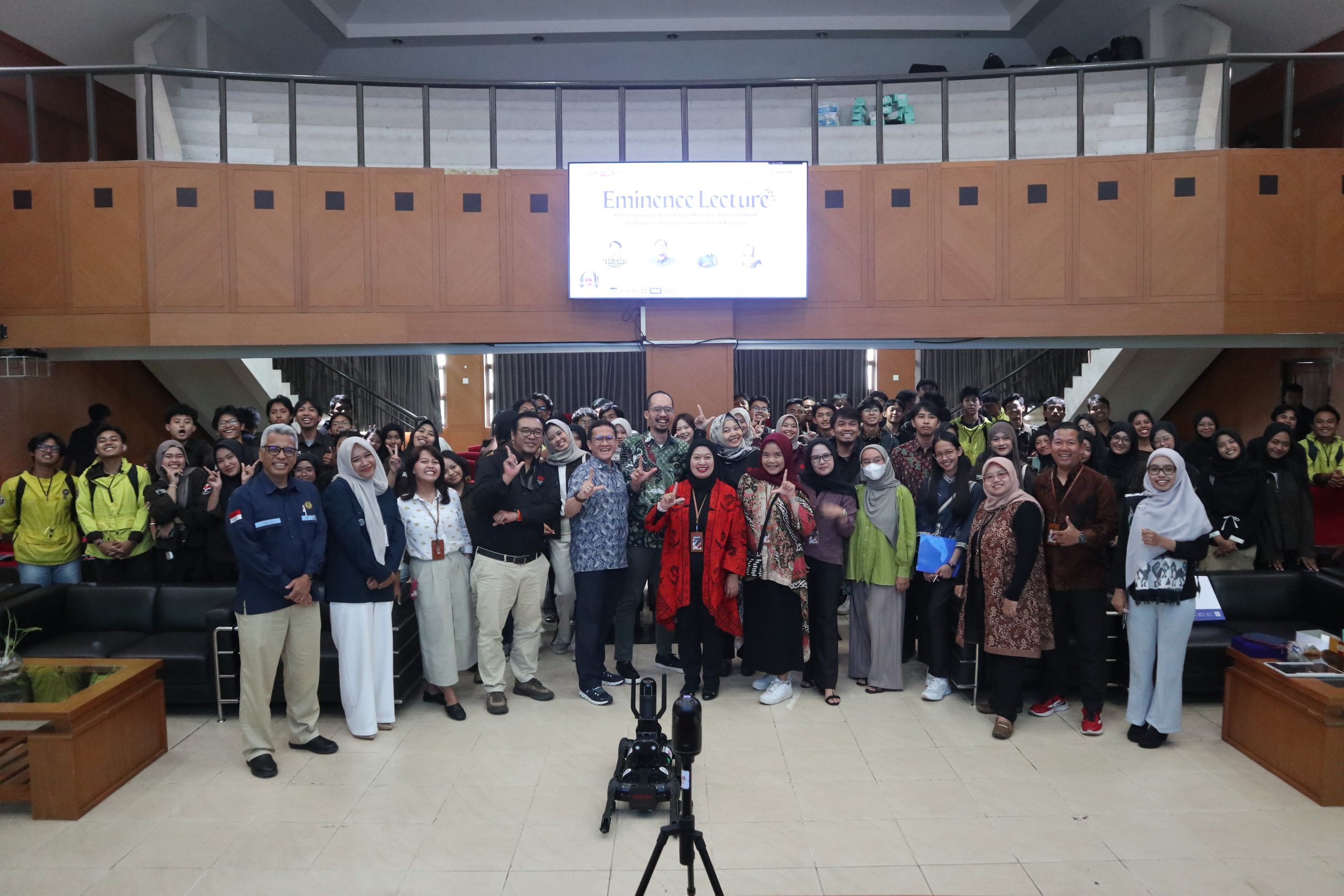
EMINENCE LECTURE 2025: 3D Geospatial-Based Disaster Management: Building a Smarter and Safer Indonesia
3D Geospatial-Based Disaster Management: Building a Smarter and Safer Indonesia
The 2025 Eminence Lecture adopted the theme “3D Geospatial-Based for Disaster Management: Building a Smarter and Safer Indonesia”, highlighting how geospatial technology and artificial intelligence are being utilized to enhance Indonesia's disaster resilience.
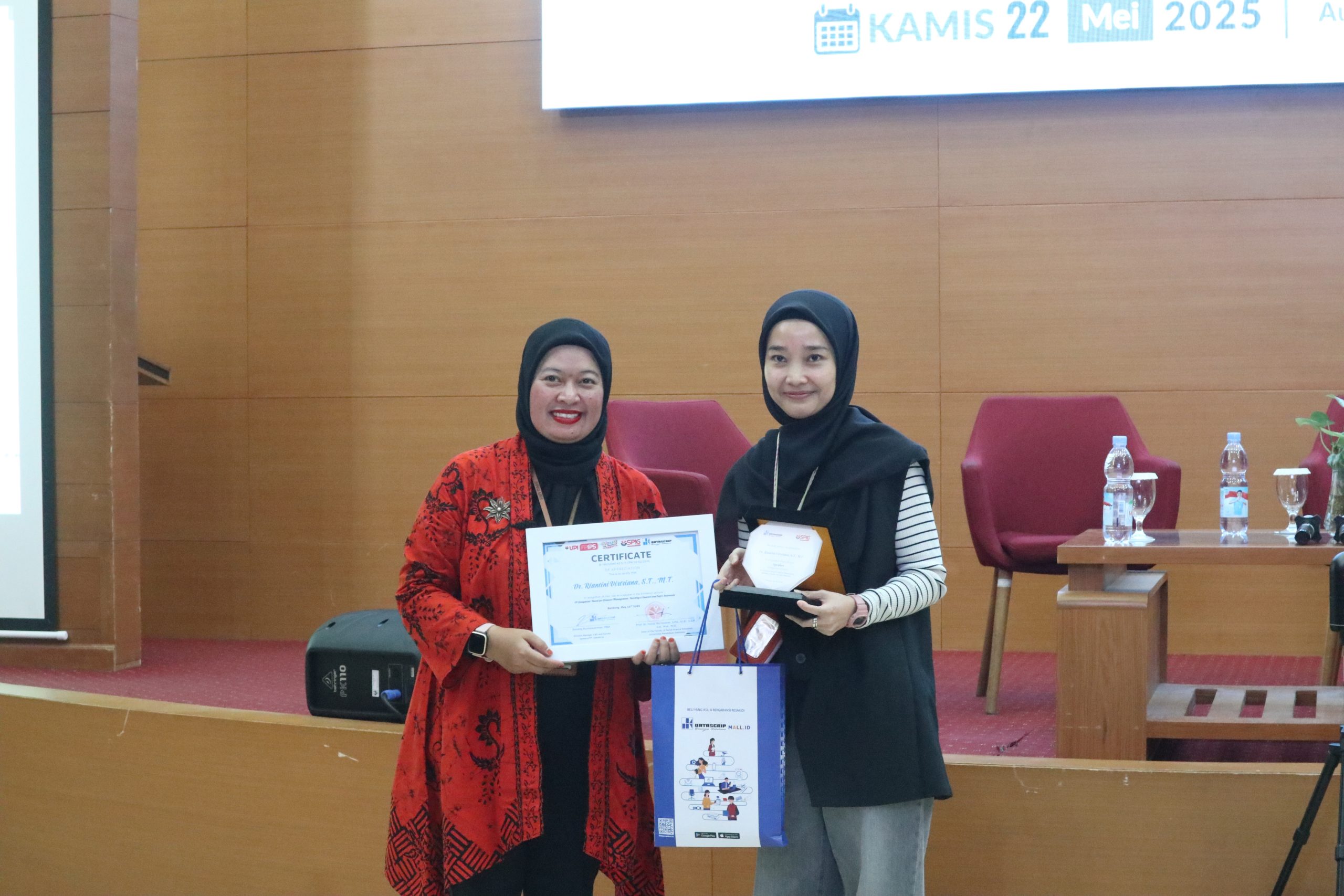
Dr. Riantini Virtiana, a lecturer at the Bandung Institute of Technology (ITB),presented the integration of 3D digital modeling and machine learning in remote sensing to detect post-disaster building damage. This approach focuses on detailed structural modeling using Building Information Modeling (BIM) and classifies damage levels (destroyed, damaged, or undamaged) based on satellite imagery using algorithms such as Random Forest and Convolutional Neural Networks (CNN). The data sources include Sentinel, WorldView-2, Copernicus, and xBD. With an accuracy of approximately 60%, the system supports tagging and evaluating damage to assess spatial risk, which is calculated by combining hazard, exposure (number of affected assets), and vulnerability, using the formula: Risk (R) = (Hazard + Exposure) / Vulnerability.
BIM technology is also employed to develop a building taxonomy through Levels of Detail (LOD 0–3), enabling systematic and accurate analysis of building profiles.
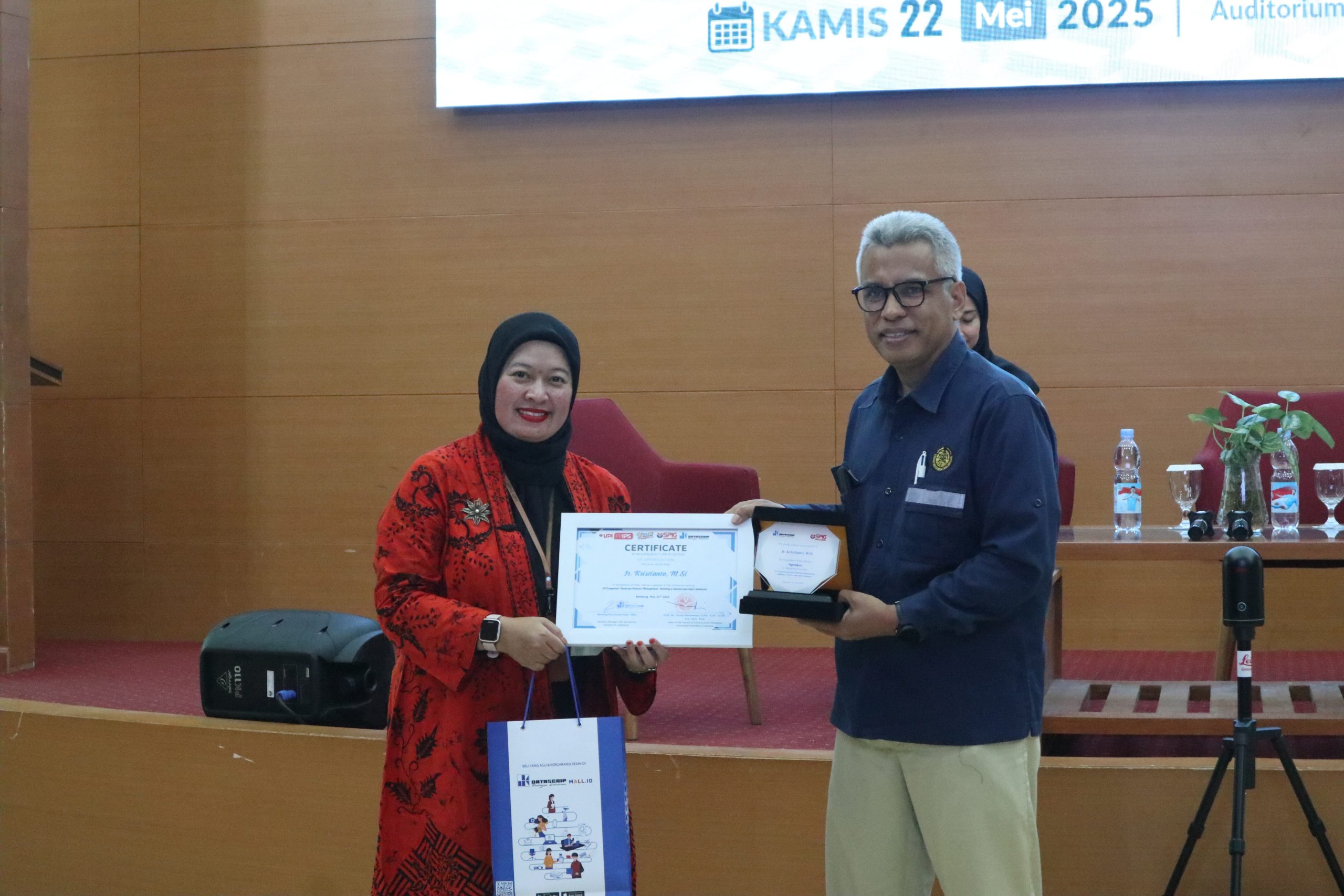
Ir. Kristianto, M.Si from the Geological Agency, reinforced this presentation by emphasizing the importance of early warning systems, particularly for volcanic eruptions. He discussed the historical impact of major eruptions such as Tambora (1815) and Krakatoa (1883), which had global climatic effects. Volcanic eruptions are classified into three mechanisms: magmatic, phreatomagmatic, and phreatic, with associated hazards divided into primary (pyroclastic flows, lava) and secondary (lahars, landslides). With 127 active volcanoes— the highest number in the world—active monitoring and public education are vital components of mitigation efforts.
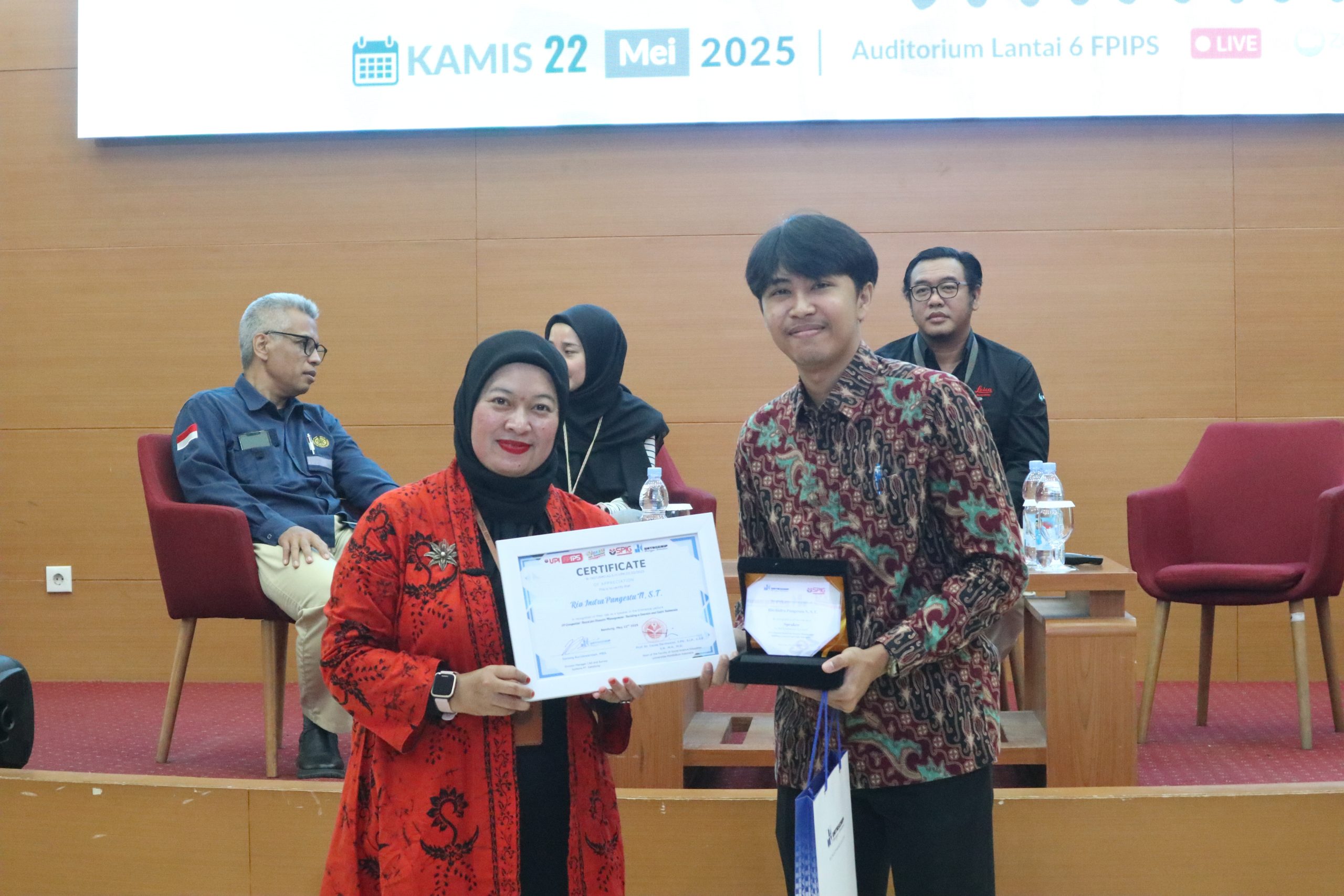
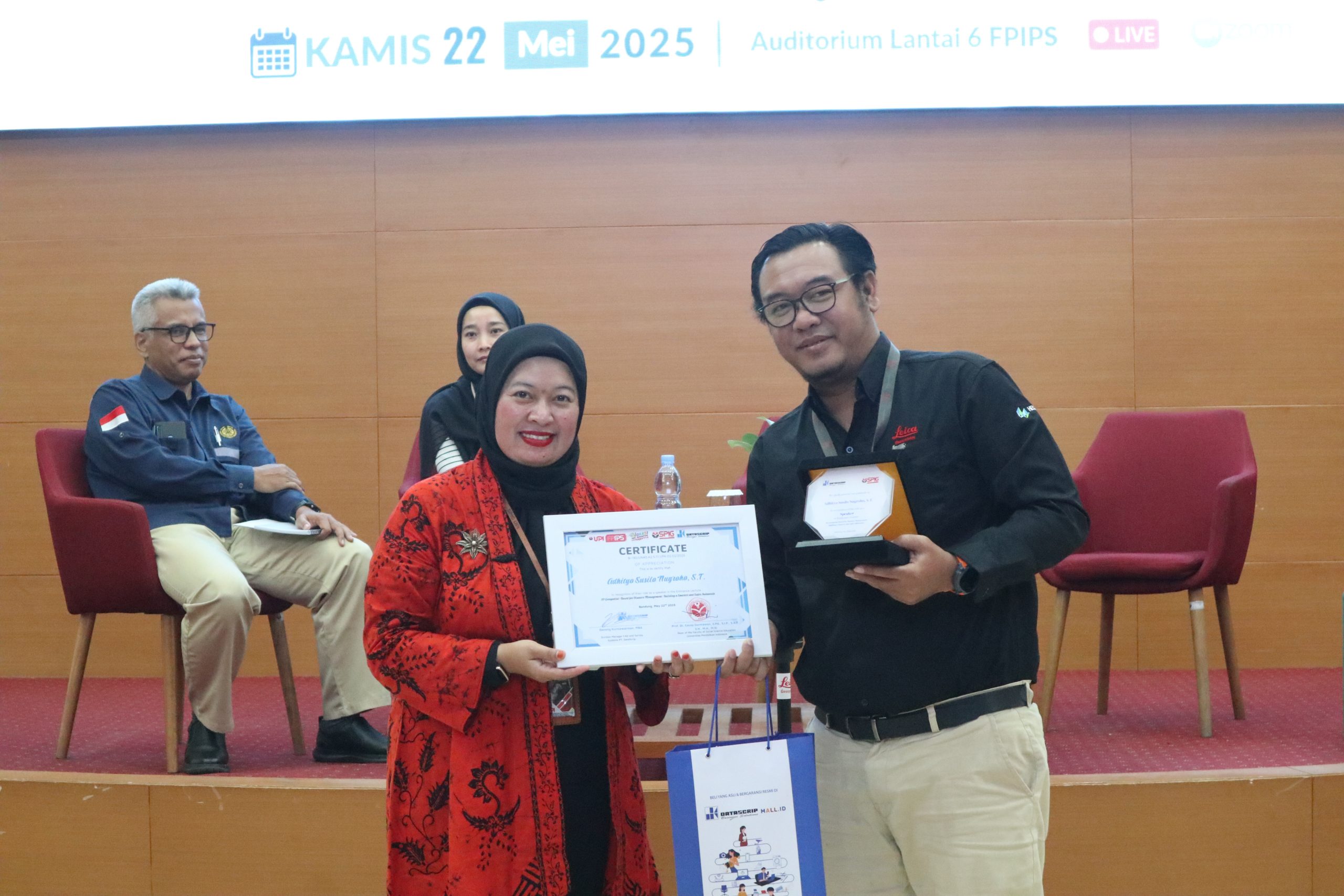
Industry perspectives were provided by Adhityo Susilo from Leica Geosystems and Rio Indra Pangestu from PT Datascript. They showcased technologies for monitoring and 3D reality capture. Instruments such as the Leica Nova TM60 and the GeoMos system enable real-time monitoring of critical infrastructure, such as bridges and volcanoes, using high-precision sensors and spatial modeling. Meanwhile, PT Datascript’s reality capture technology is applied in disaster scenario simulations, infrastructure monitoring, and long-term urban planning. Its advantage lies in its ability to visualize post-disaster conditions realistically, thus expediting on-site decision-making processes.