Highlighting the Fieldwork EXPOSE of SPIG
A Message from the Head of Study Program
Dr. Nanin Trianawati Sugito, S.T., M.T.
Bismillah...
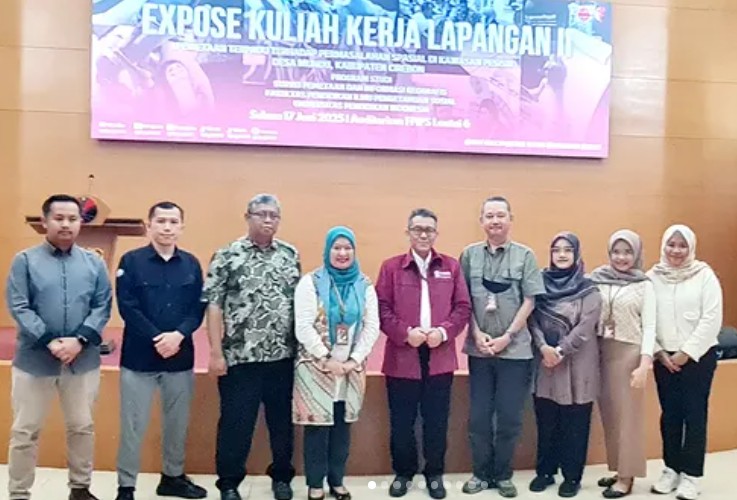
On June 17, 2025, the Mapping Survey and Geographical Information Systems Study Program (D4 SPIG) proudly held the Expose of Fieldwork Lecture (KKL I and II) at the FPIPS Auditorium, Universitas Pendidikan Indonesia. Fieldwork, or Kuliah Kerja Lapangan (KKL), is an integral part of our academic curriculum, carefully designed to provide students with direct, immersive learning experiences in real-world environments.
This year’s KKL Expose was particularly special, as it was conducted in parallel with two other closely related programs within the faculty: the Geography Education Program and the Geographical Information Science Program—celebrating our shared vision of geospatial learning and application.
Fieldwork Course I (KKL I): Understanding Landforms and Mapping Village Assets
KKL I was attended by the Class of 2024 SPIG students and took place from May 8 to 13, 2025, across selected areas in the City and Regency of Tasikmalaya. The field activities focused on two core aspects:
1. Landform observation and geomorphological mapping
2. Village asset mapping and inventory
These activities were not just technical exercises; they were also valuable platforms to train students in teamwork, field communication, and the application of professional ethics in real survey settings.
Fieldwork Lecture II (KKL II): Integrated Mapping of Coastal Spatial Issues
Meanwhile, KKL II involved the Class of 2023 SPIG students and was conducted from May 8 to 12, 2025, in Mundupesisir Village, Mundu District, Cirebon Regency. This second fieldwork experience carried the theme:
“Integrated Mapping of Spatial Problems in the Coastal Area of Mundupesisir Village.”
Throughout the fieldwork, students produced a series of thematic and technical maps, including:
1. Village boundary maps
2. Hamlet (dusun) boundary maps
3. Coastal flood hazard maps
4. Vulnerability maps for tidal flooding
4. Conservation-based tourism maps
5. Groundwater flow net maps
These products reflect not only the students’ technical mapping abilities but also their growing understanding of spatial analysis, environmental conditions, and the socio-economic dynamics of coastal communities.
Alhamdulillah, the fieldwork program successfully equipped our students with essential core competencies in surveying and geospatial mapping. More importantly, it fostered a heightened awareness of the value of spatial understanding and environmental sensitivity in the pursuit of data-driven, sustainable development.
On behalf of the study program, we extend our deepest gratitude to our collaborating partners, supervising lecturers, participating students, and all stakeholders who contributed to the success of this year’s KKL activities.