
Master Programme
Geography Education — Universitas Pendidikan Indonesia
Introduction
The Master’s Program in Geography Education (S2) was established on April 6, 2010, based on the Directorate General of Higher Education Decree No. SK 2293/H40/DT/2010, under the Graduate School, and is currently integrated with the Undergraduate and Doctoral Geography Education Study Programs within the Faculty of Social Science Education. This program is designed to produce advanced educators, curriculum developers, and researchers who are capable of leading innovation in geography education at the higher education level as well as within the broader education system. The program was established in response to the need for graduates of the Undergraduate Geography Education program to continue their studies at the master’s level.
Academic Staff
Programme Structure
Curriculum Components and ECTS Conversion
| No. | Educational Component | Credits | ECTS Conversion | Description / Course Examples |
|---|---|---|---|---|
| 1 | Alignment of Study Program Expertise (PLKP) | 3–11 Credit | 4.5–16.5 ECTS |
|
| 2 | Academic Skills Development (PKA) | 40–48 Credit | 60–72 ECTS |
|
| 3 | Discipline-Specific Expertise Development (PKBI) | 36–60 Credit | 54–90 ECTS |
|
| TOTAL | 37–49 Credit | 53–71 ECTS | Completed within the normal study period of 4 semesters (2 years) | |
Curriculum
The Master Program in Geography Education curriculum integrates advanced geographical sciences, geography pedagogy, research methodology, and scientific publication to support academic, professional, and research competencies in geography education.
Graduate Learning Outcomes (CPL)
- Graduates are expected to demonstrate scientific, educational, and religious attitudes and behaviors based on academic norms and ethics.
- Graduates master the philosophy of geography education, geographical sciences, geography pedagogy, research methodology, and ethics of scientific publication.
- Graduates are able to develop and apply geographical and pedagogical knowledge in an adaptive and progressive manner according to current developments.
- Graduates are able to design and conduct research in geography education using appropriate approaches and methods.
- Graduates are able to communicate and publish research results through scientific forums and publications.
- Graduates are able to integrate innovation skills, technology mastery, lifelong learning, and interdisciplinary thinking in academic and professional activities.
Curriculum Orientation
| Curriculum Component | Implementation in the Program |
|---|---|
| Geography Education Philosophy | Strengthening theoretical and philosophical foundations in geography education to support academic and professional development. |
| Advanced Geographical Sciences | Developing deeper understanding of geographical sciences and geospatial perspectives in addressing contemporary issues. |
| Research Methodology | Training students to design, conduct, and evaluate research in geography education using appropriate scientific approaches. |
| Scientific Publication | Encouraging students to communicate and publish research findings through scientific forums and academic publications. |
The curriculum structure of the study program demonstrates that each course has its own specific learning outcomes, which contribute to the achievement of programme-level Graduate Learning Outcomes (CPL).
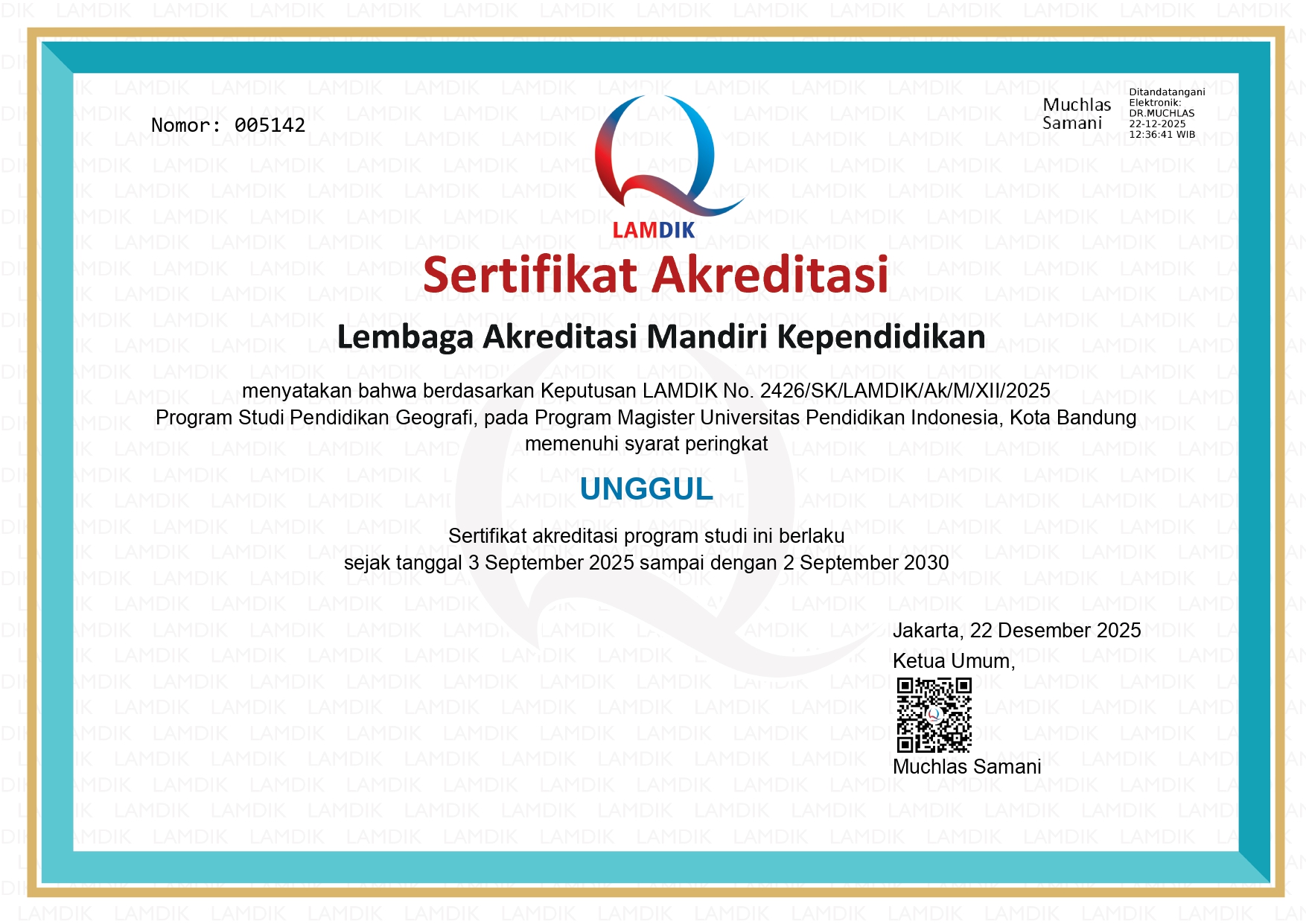
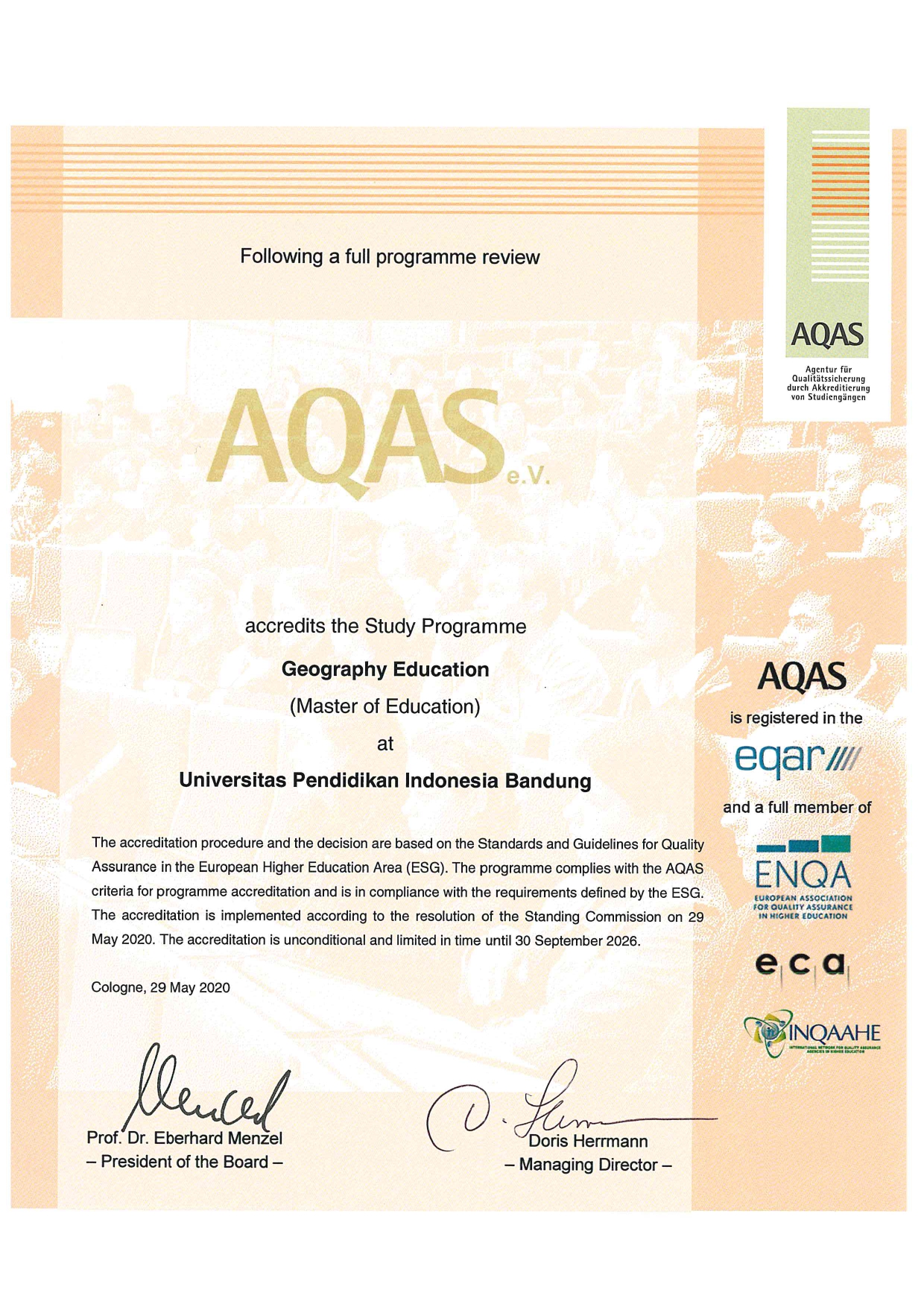
Accreditation
Admission
Admission information for the Doctoral Programme, including RPL pathways and registration procedures.
Apply Now