
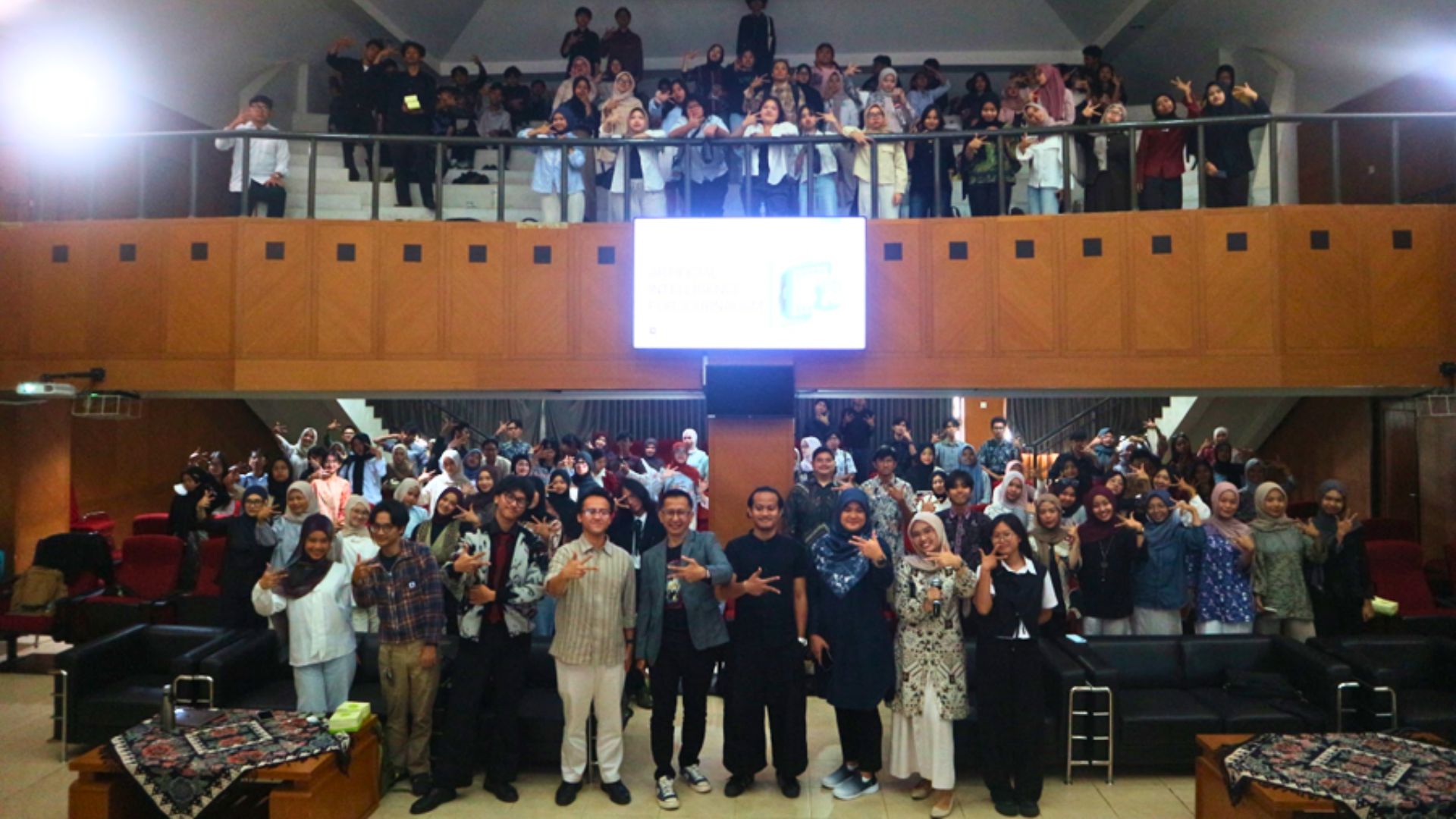

BANDUNG — The utilization of Artificial Intelligence (AI) is considered capable of driving more impactful and constructive journalism practices in the digital era, provided it remains balanced by the human role in maintaining humanistic values.
This seminar was officially opened by the Head of the Communication Studies Study Programme, Dr. A. Fahrul Muchtar, M.Si., S.S. In his remarks, he emphasized the importance of student readiness in facing increasingly rapid technological developments, particularly regarding AI within the communication and media industry. This initiative aligns with SDG 4 (Quality Education), as it ensures students receive relevant, future-oriented skills to thrive in a digital economy.
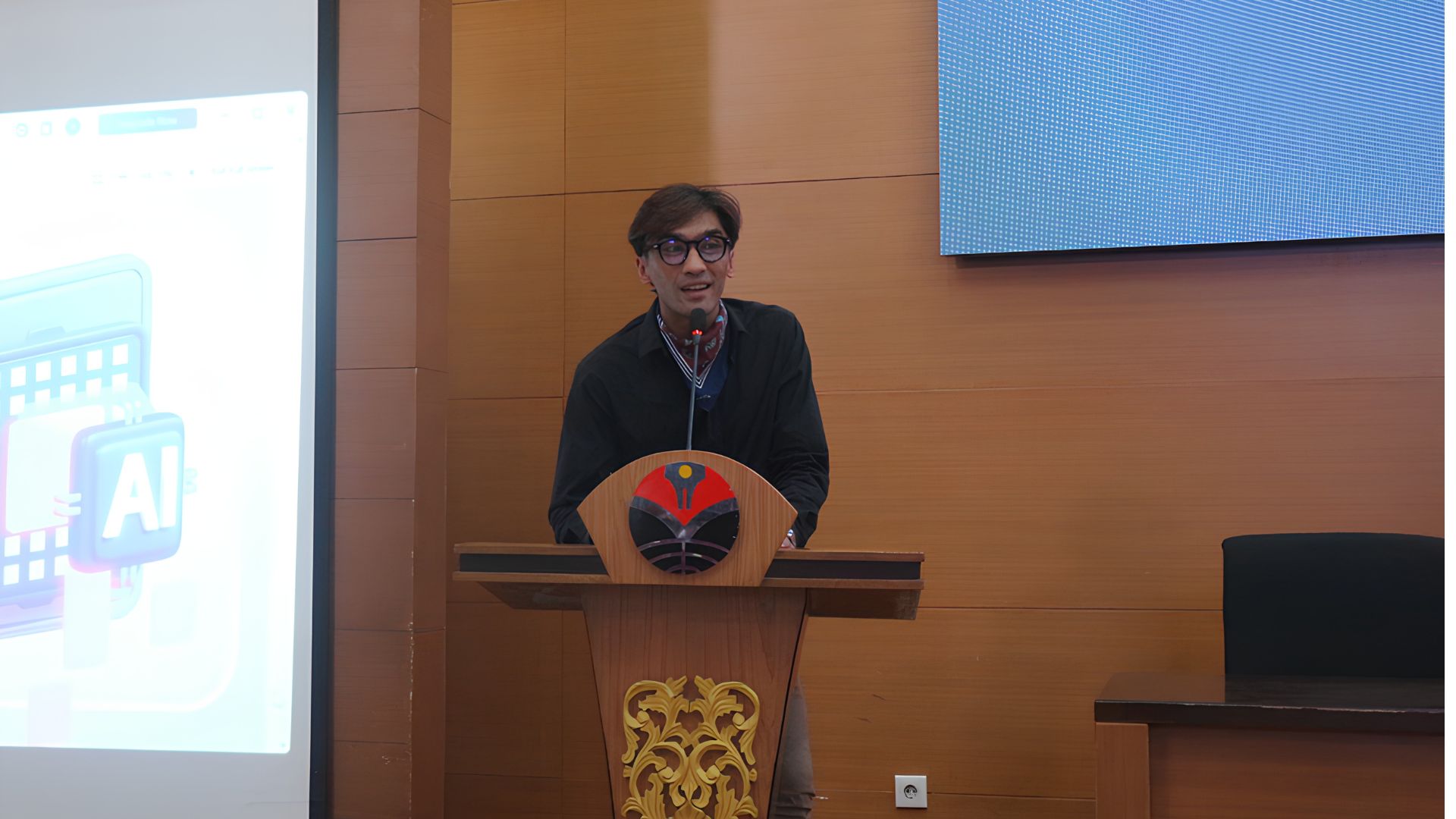
The event featured Deni Yudiawan and Dzaki Dwitama, Partnership and Business Managers of BandungBergerak, as speakers in a guest lecture session for students of the Communication Studies Study Programme. During the session, Dzaki Dwitama introduced BandungBergerak as a local alternative media outlet where he is actively involved. According to him, the media focuses on data-based journalism, community empowerment, and various offline activities that involve the public directly.
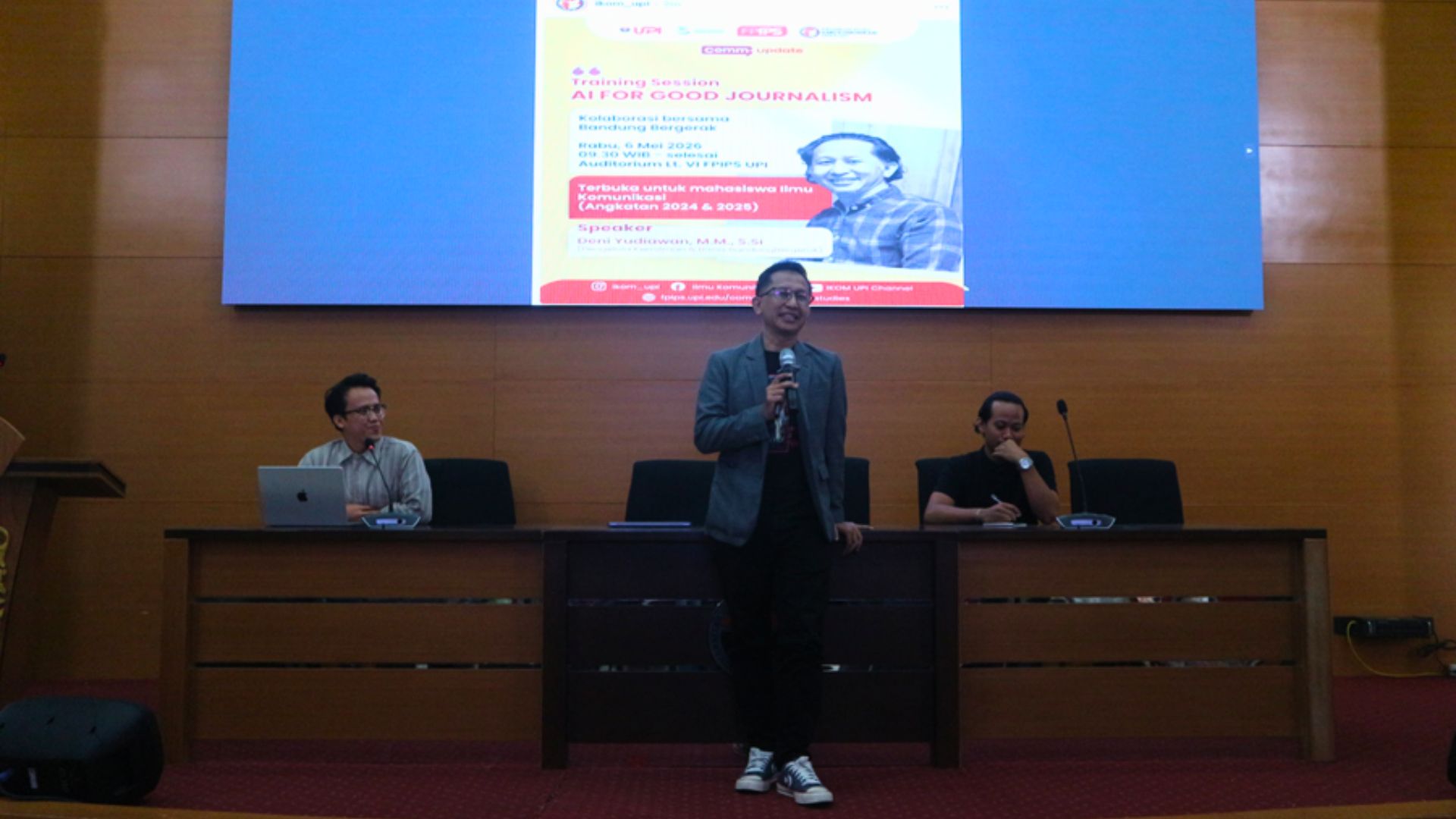
"BandungBergerak is not just a media outlet, but also a space for community collaboration. We want to present journalism that is close to the people," said Dzaki. This focus on inclusive innovation and community-based infrastructure reflects the spirit of SDG 9 (Industry, Innovation, and Infrastructure) by fostering local media resilience.
In his presentation, Deni explained that the development of AI has changed the way media operates, from the production process to information distribution. He noted that this technology allows journalists to work faster and more efficiently in delivering information to the public.
Along with this, there has been a shift in audience behavior regarding news consumption. Deni mentioned that the public, especially the younger generation, no longer relies solely on mainstream media; instead, they often obtain initial information from social media and AI-based platforms.
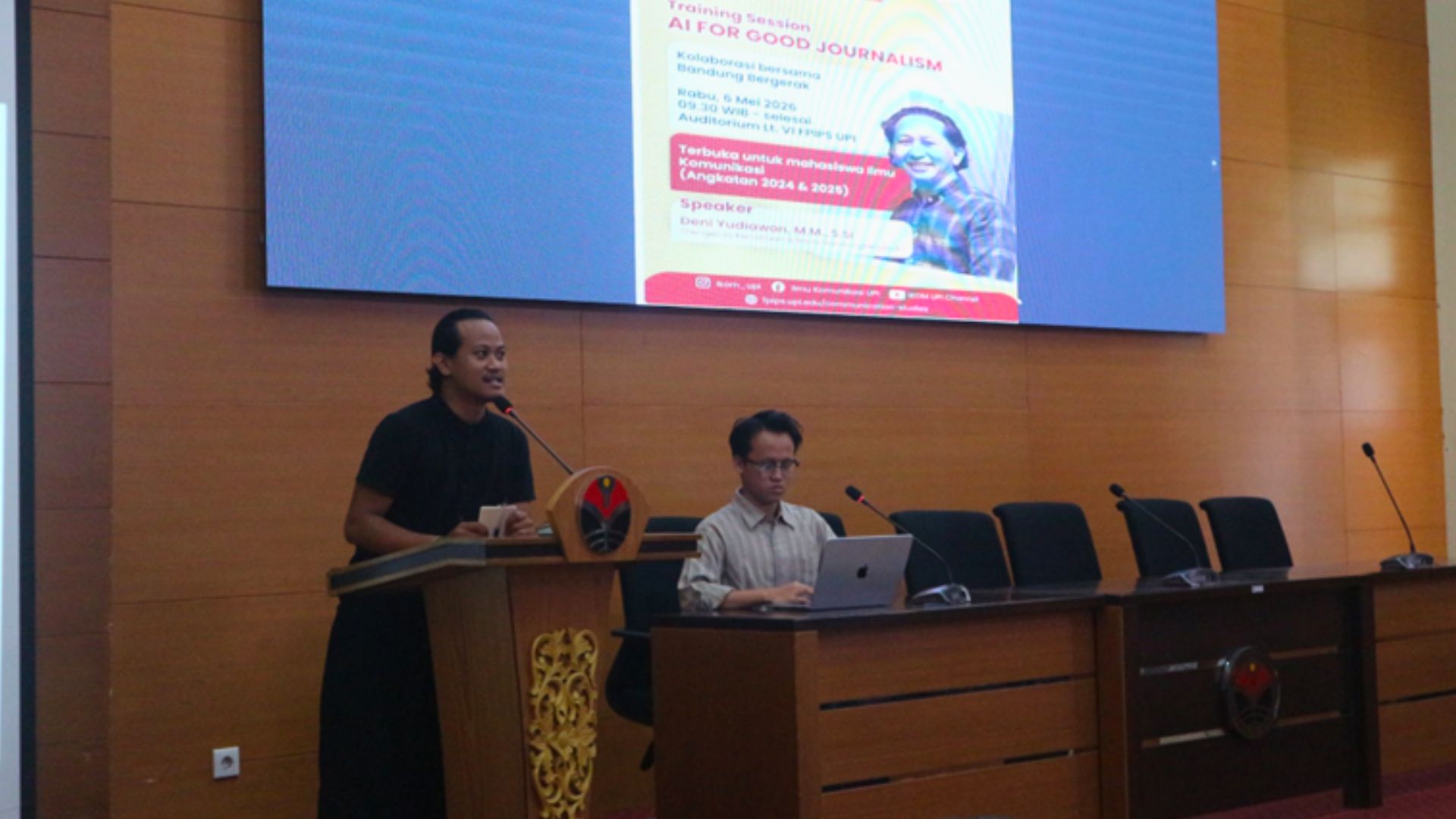
"Nowadays, people don't always look for news through online media. Many find out about events for the first time through social media," he said. He pointed to the events of April 27, which became public knowledge through social media before being covered by conventional media, illustrating an increasingly rapid change in the information ecosystem.
Despite this, Deni asserted that AI cannot fully replace the role of a journalist. According to him, technology lacks the empathy required to present humanistic and contextual perspectives.
"AI cannot fully replace the human touch," he emphasized. The experience in the BandungBergerak newsroom also shows that although AI-based content can attract attention, audiences tend to be more receptive to content involving humans because it is deemed more authentic.
Closing the session, Deni emphasized that the future of journalism does not lie in a choice between humans or AI, but in the collaboration of both to produce impactful journalistic work. This commitment to ethical information distribution supports SDG 16 (Peace, Justice, and Strong Institutions) by ensuring public access to information and upholding the integrity of the press.
"The most important thing is how we utilize AI wisely without abandoning the ethical values of journalism," said Deni.
Writer: Danillah Nur Rahmat, Zaidan Ramadhan
Editor: Azza Qorotu Aini, Heny Indah Mulyani
Photography: Fajra Alfasino
Note: This article was written by students of the specializing in Journalism. The version displayed has been curated and supplemented with insights regarding the connection between the activities and the Sustainable Development Goals (SDGs).