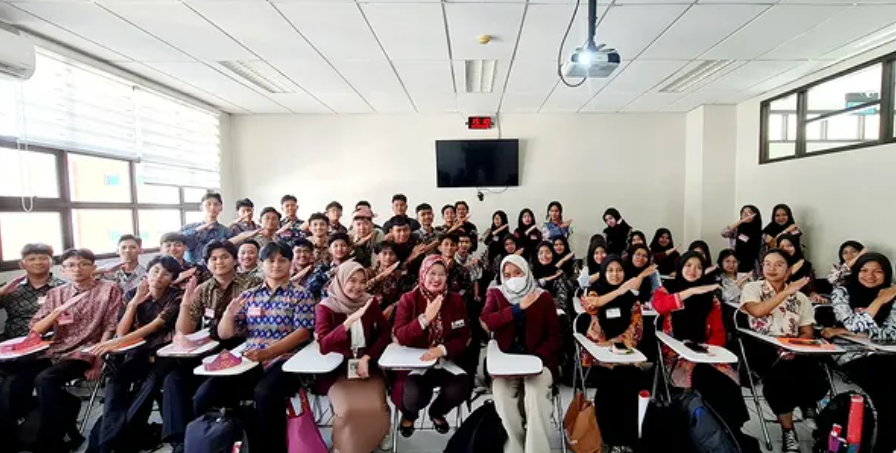
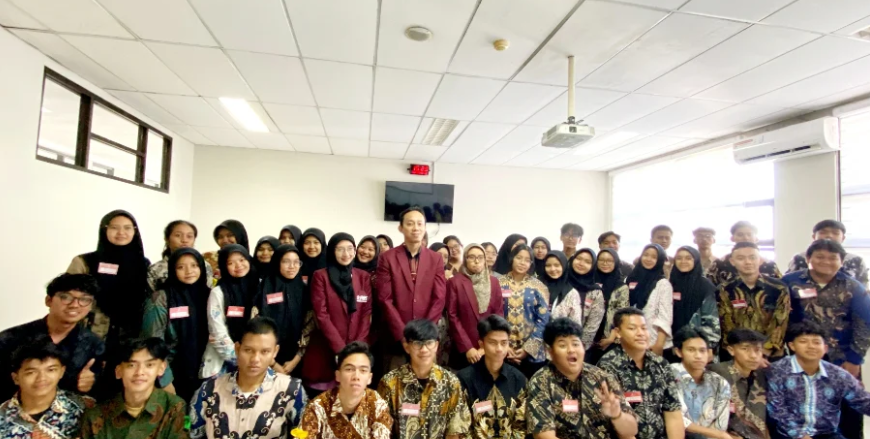
Bandung, August 26th 2025 - The beginning of an academic journey is more than just an orientation, it is the planting of seeds for future change. At Universitas Pendidikan Indonesia (UPI), the Diploma 4 (D4) Program in Mapping Survey and Geographic Information (SPIG) welcomed its new students for 2025 with a vision that goes far beyond classrooms: aligning higher education with the United Nations Sustainable Development Goals (SDGs).
Nurturing Knowledge Through Inspiring Guidance
The welcoming agenda was enriched with insightful presentations delivered by Dr. Nanin Trianawati Sugito, Asri Ria Affriani, S.T., M.T., Totok Doyo Pamungkas, S.T., M.T., and Annisa Nabila, S.T., M.T. Each speaker emphasized how SPIG’s academic journey is designed not only to equip students with strong technical expertise in geospatial sciences, but also to prepare them as future professionals who can directly contribute to sustainable development in Indonesia and beyond.
Education as the Foundation (SDG 4: Quality Education)
From its transformation into a D4 program in 2022, SPIG has emphasized both technical expertise and strong character development. By preparing graduates who master surveying, geospatial information, and spatial analysis, the program embodies SDG 4: Quality Education, ensuring access to knowledge that directly addresses the demands of society, industry, and government.
Supporting Sustainable Cities and Communities (SDG 11)
The academic focus of SPIG; surveying, land and water resource mapping, forestry, agriculture, coastal studies, and spatial planning, directly contributes to SDG 11: Sustainable Cities and Communities. Students are trained to provide spatial data for urban planning, disaster mitigation, and sustainable land use, ensuring that future development balances human needs with environmental preservation.
Innovation and Industry Partnerships (SDG 9: Industry, Innovation, and Infrastructure)
Partnerships with leading institutions and companies; such as PT Freeport Indonesia, SuperMap, and government agencies, demonstrate how SPIG integrates academia with real-world challenges. These collaborations create innovation pipelines, providing students with hands-on experiences that link education to SDG 9: Industry, Innovation, and Infrastructure.
Environmental Stewardship (SDG 13, 14, and 15)
Remote sensing, GIS, and geospatial technologies are essential for climate action, sustainable forestry, water resource management, and biodiversity protection. The program’s research and fieldwork directly support SDG 13 (Climate Action), SDG 14 (Life Below Water), and SDG 15 (Life on Land). By equipping students with tools like drones, LiDAR, and advanced GIS, SPIG ensures that graduates are not only observers but active contributors to ecological balance.
Empowering Students as Change Agents
The welcoming agenda stressed that university life is not merely about attending classes but about building networks, character, and purpose. Students are encouraged to join organizations, engage in research, and participate in community service, making them agents of change who embody the principles of sustainability, inclusivity, and innovation.
A Call to Action
As emphasized throughout the program, Indonesia does not only need smart people,it needs people with strong character, cultural values, and the ability to work for society. This resonates with the holistic nature of the SDGs: knowledge must translate into ethical action, collaboration, and sustainable solutions.
By embedding the SDGs into its curriculum and student activities, and through the inspiring guidance of its dedicated lecturers, the SPIG Program at UPI ensures that welcoming new students is not only about academic preparation, but also about shaping leaders of sustainable development.