


TVRI's Arah Angin Live Explores an Ambitious Government Initiative to Transform The National Education Landscape
Jakarta, October 15, 2025 – In a comprehensive live broadcast on TVRI's flagship program "Arah Angin Live," Indonesia's ambitious Garuda Schools initiative took center stage, revealing the government's transformative vision for educational reform that promises to bridge the gap between regional disparities while cultivating globally competitive yet culturally rooted Indonesian youth.
The Garuda Schools program represents more than just an educational initiative, it embodies Indonesia's determination to democratize access to quality education while maintaining the nation's cultural identity. During the live discussion, three distinguished panelists shared their insights on this groundbreaking project that aims to reshape Indonesia's educational foundation.
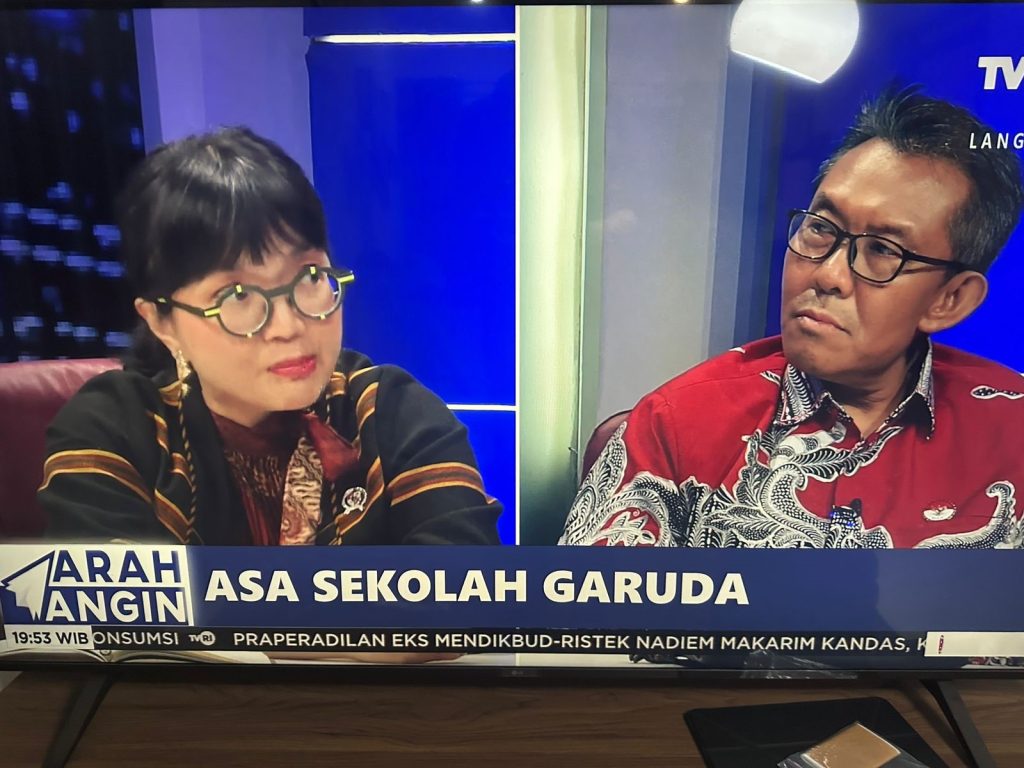
Professor Stella Christie, Deputy Minister of the Ministry of Higher Education, Science, and Technology, emphasized the program's dual mission: "Garuda Schools serve as a bridge for educational equity while simultaneously forging a generation of young people with global competitiveness, yet firmly rooted in strong local character values."
What sets Garuda Schools apart from conventional educational institutions is their holistic approach to student development. While maintaining rigorous academic curricula that meet international standards, these schools place equal emphasis on character building, discipline, and leadership development – values deeply embedded in Indonesian culture.
Hadian Irfani, Deputy Chairman of Commission X of the House of Representatives (DPR), highlighted the legislative support behind this initiative, stressing the importance of parliamentary backing in ensuring the program's sustainability and nationwide implementation.
Professor Cecep Darmawan, an Education Policy Observer and dean of FPIPS Universitas Pendidikan Indonesia (UPI), provided academic perspective on the policy implications, noting how Garuda Schools could serve as a model for educational transformation across the archipelago.
The government's commitment to the Garuda Schools initiative is reflected in both its ambitious targets and significant financial backing. Through the Ministry of Higher Education, Science, and Technology (Kemendiktisainstek), the administration has set a remarkable goal: by 2029, Indonesia will host 80 schools under the Garuda Schools Transformation program, complemented by 20 new Garuda Schools strategically located in priority regions.
The immediate impact is equally impressive. This year alone, the government targets the establishment of 16 Garuda Schools, supported by a substantial budget allocation of 2 trillion rupiah (approximately $133 million USD). This investment demonstrates the administration's serious commitment to educational reform and its recognition of education as a cornerstone of national development.
The placement of Garuda Schools in "priority regions" reflects a carefully considered strategy to address educational inequities that have long plagued Indonesia's vast archipelago. By focusing on underserved areas, the program aims to ensure that geographical location no longer determines educational opportunities for Indonesian children.