
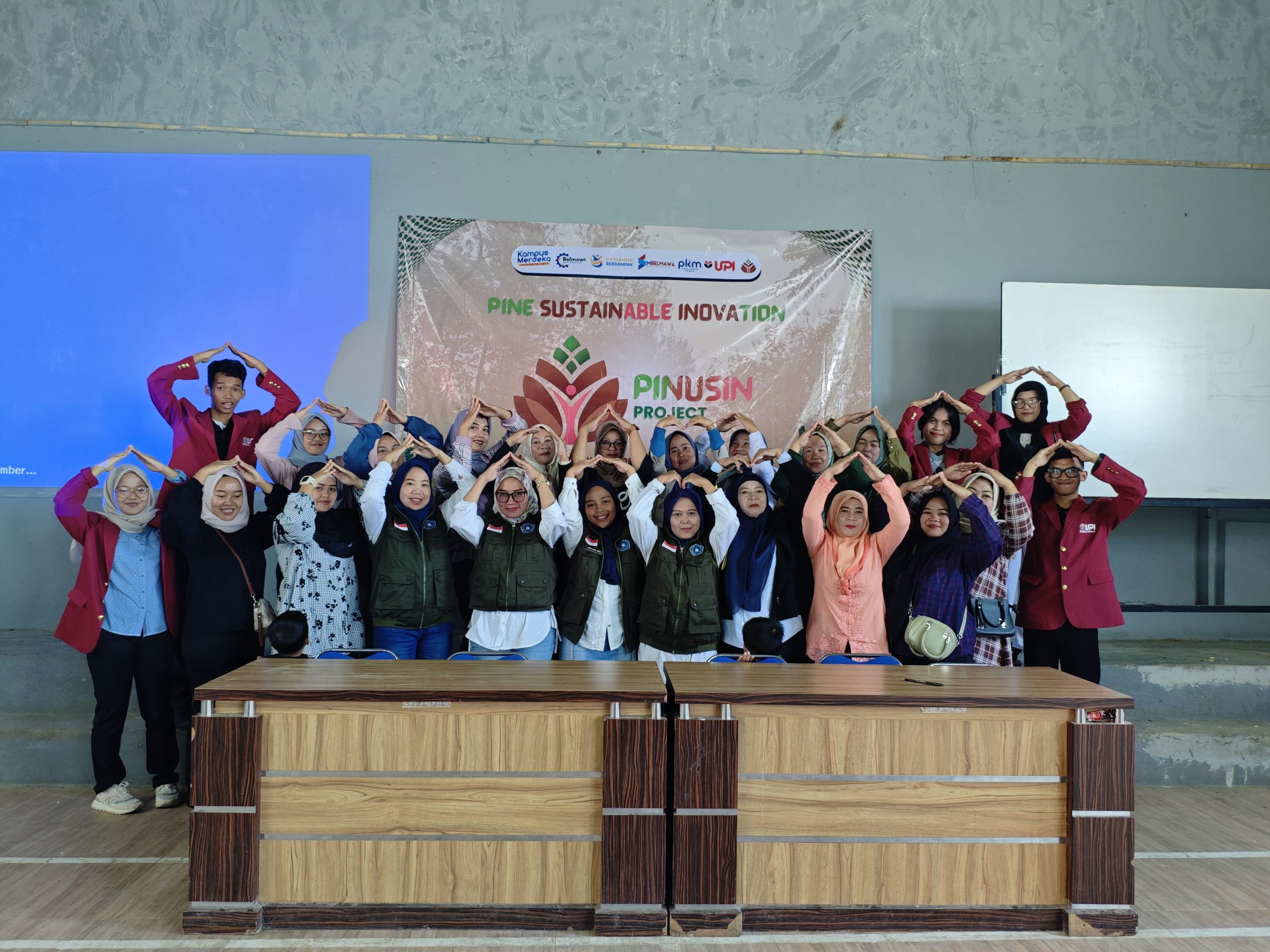

The Pinusin team from the University of Indonesian Education's (UPI) Student Creativity Program for Community Service (PKM-PM), under the supervision of Mrs. Dias Pratami Putri, S.Pd., M.Si, and led by Deni Komarudin with four members—Elin Siti Nurjanah, Nu’ma Zhilal Azizah, Sulthan Khairuddin Rahman, and Putri Abrilyati Azizah—has introduced a new innovation in Mekarmanik Village.
Starting from the abundance of natural resources in the form of pine trees, which have been underutilized and even posed a problem for Mekarmanik Village, the Pinusin team strives to empower the community through various training sessions.
To enhance village skills and potential, the women from the Family Empowerment and Welfare program (PKK), who daily have routines as housewives or teachers, were actively involved.
This program is not only a form of tangible student contribution to society but also addresses the challenges of the Sustainable Development Goals (SDGs) and aligns with the mission of sustainable development stated in Asta Cita 6.
Here is the utilization of pine tree potential into high-economic-value products:
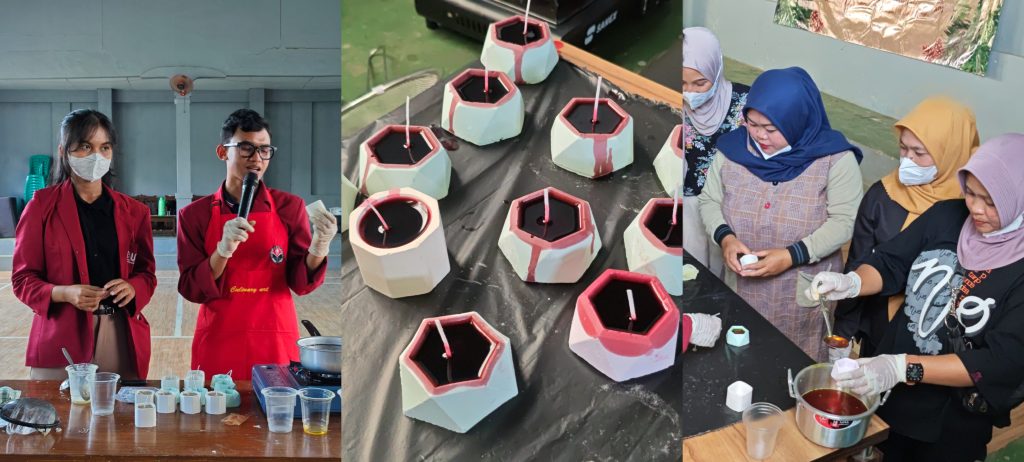
Scented Candles from Pine Sap:
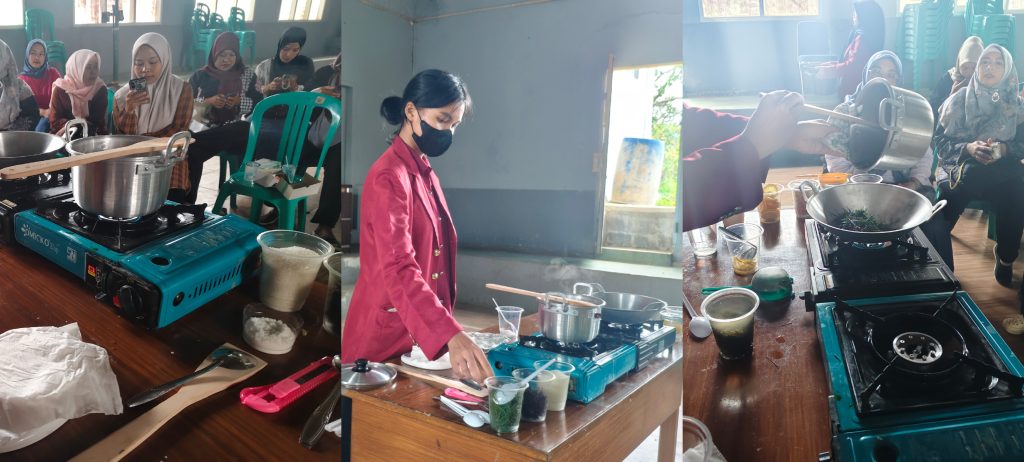
In the initial training, the Pinusin team introduced aromatherapy candles made from pine sap. By utilizing used cooking oil, which is generally household waste, it is now managed into valuable products through combination with candle-making materials. The distinctive aroma that can calm the body makes this product not only eco-friendly but also functional.
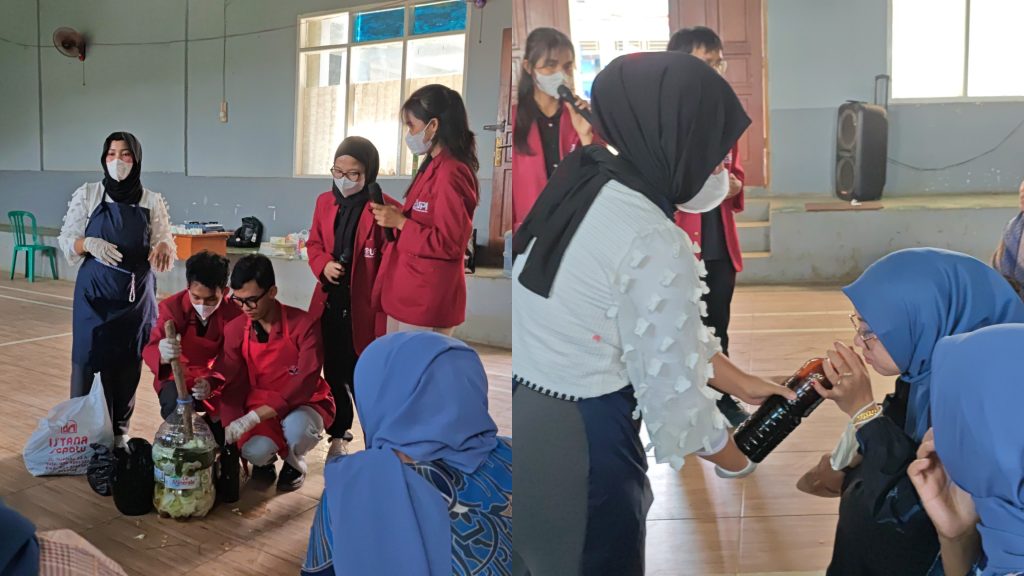
Eco-Enzyme from Household Waste and Pine Leaves:
Mekarmanik Village's main livelihood is farming. Abundant harvests often get selling prices that are not commensurate, resulting in a lot of food waste from harvest leftovers. This encouraged the Pinusin team to create an eco-enzyme program combined with pine leaves as a chemical-free, environmentally friendly innovation.
Tea from Pine Leaves:
Furthermore, the Pinusin team introduced an innovation of healthy tea beverages from pine leaves, packaged with a village story label. The product development process began with laboratory tests on tea samples to measure vitamin C content and ensure product feasibility. Lab tests were conducted at the Chemistry Department Laboratory of FPMIPA UPI with a laboratory lecturer to obtain more accurate results.
Bio-briquettes from Pine Flowers:
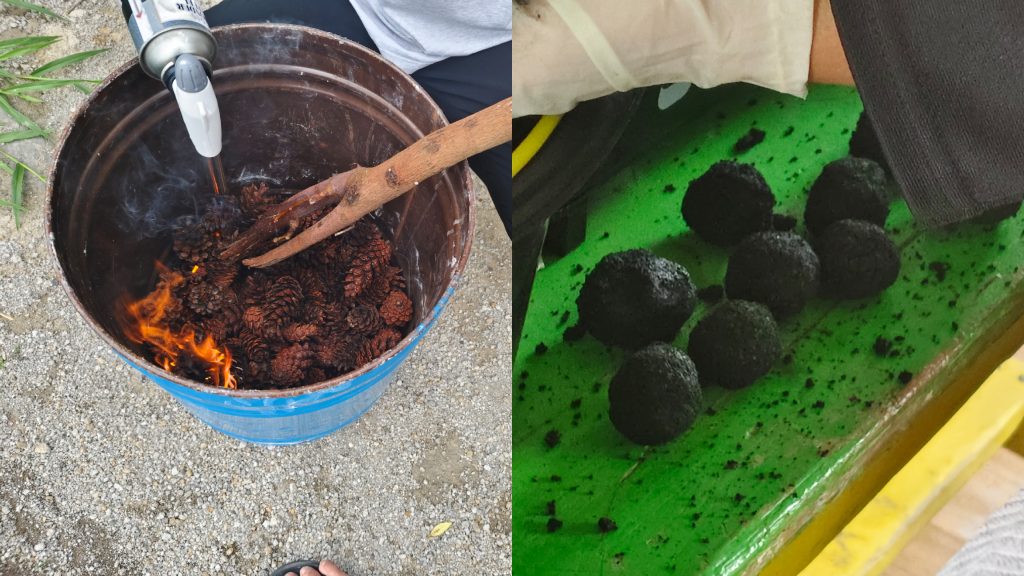
The abundant pine flowers in Mekarmanik Village turn out to have great benefits for the residents. Noting the still widespread use of stoves in the community, bio-briquettes became a brilliant idea as their utilization serves as an eco-friendly and cost-saving alternative fuel.
This program not only aims to process natural materials but also encourages how residents, especially women, can be involved. The women in the community, as the main participants in this program, play an important role in household activities and the family economy.
The team leader explained that the involvement of women is part of gender equality efforts. "Every woman has a voice, dreams, and the power to change the world. Here, we grow together by sharing stories, strengthening each other, and igniting the spirit with women," quoting one caption uploaded via the Instagram account @pinusin_pkmpmupi.
The Pinusin team hopes that the resulting innovations can continue to be developed by the community as business opportunities and solutions for utilizing pine trees, which are the main problem in Mekarmanik Village.
Writer: Hamidah Nargis