

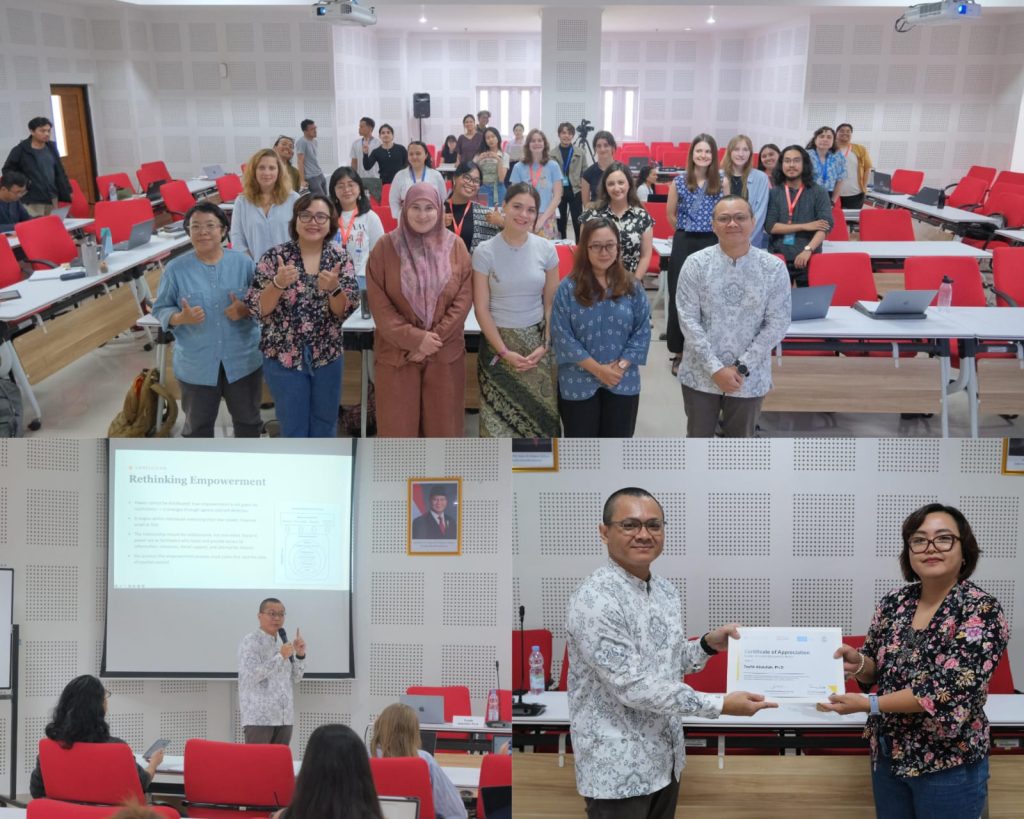
Yogyakarta, June 25, 2026 – Issues surrounding unequal power relations in tourism development took center stage during The Summer School "The New Orientalism: Understanding the Paradoxes of Mass Tourism in Southeast Asia", organized by the Department of Anthropology, Universitas Gadjah Mada (UGM), on Thursday (June 25) in Yogyakarta.
The session, titled "From Marginalization to Empowerment: Examining Power Relations in Tourism Development," brought together Master's and Doctoral students from Canada and various Southeast Asian countries to explore how tourism development not only generates economic opportunities but also shapes power dynamics that significantly affect local communities.
During the session, the speaker emphasized that tourism development often places local communities in disadvantaged positions, where decision-making processes are largely dominated by governments, investors, and tourism industry stakeholders. As a result, the voices and interests of local communities—the very people who are integral to tourism destinations—are frequently marginalized.
Drawing on anthropological perspectives, participants examined various forms of marginalization in tourism development while discussing strategies for empowering local communities to actively participate in planning, managing, and benefiting from tourism initiatives.
The discussion also underscored that sustainable tourism development should extend beyond economic growth. It must promote social justice, ensure the equitable distribution of benefits, and recognize the rights, cultures, and local knowledge of host communities.
The Summer School served as a platform for cross-cultural academic exchange, enabling participants from diverse backgrounds to discuss the challenges and paradoxes of mass tourism in Southeast Asia. Through this international dialogue, the program aimed to foster new perspectives on tourism development that are more inclusive, equitable, and community-centered.
Author : Fadlan Izzaturahman