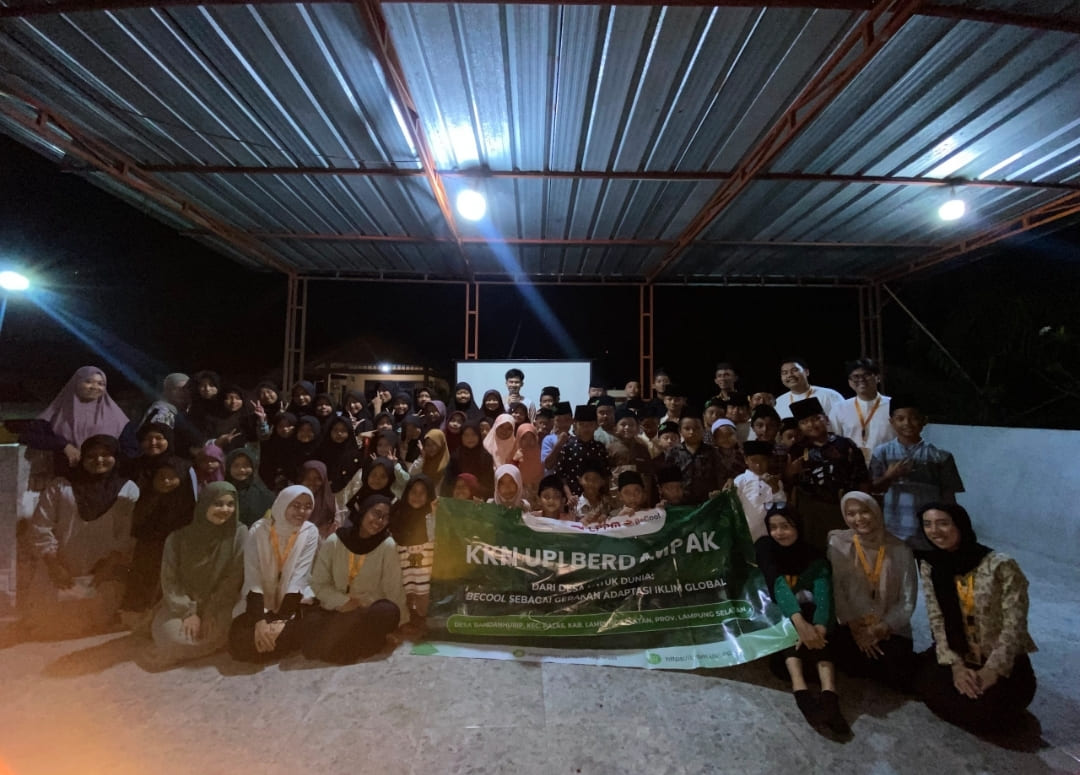
Bandan Hurip Village, located in Palas District, South Lampung Regency, became a living example of how the Kuliah Kerja Nyata (KKN) Community Service Program of UPI 2025 contributes directly to the achievement of the Sustainable Development Goals (SDGs).
With its strong agrarian potential as a rice-producing area, the village holds great promise for advancing local economic development while also addressing pressing social and environmental challenges. Through programs carefully designed based on field observations and community discussions, UPI students successfully transformed knowledge into real impact.
Quality Education (SDG 4)
Education served as the foundation of this initiative. The students conducted religious learning sessions at local TPA (Islamic learning centers) and character education and anti-bullying classes in elementary schools. These activities instilled moral values, empathy, and respect among children from an early age.
For the youth, an inspiring class titled “Know Yourself, Achieve Your Dreams” helped them reflect on their strengths and interests while preparing for future education and career paths. This aligns with the goal of inclusive, equitable, and quality education.
Climate Action and Environmental Sustainability (SDG 13)
The flagship program, BeCool, introduced a simple yet innovative solution: painting house roofs with specific colors to reduce indoor heat. This initiative addressed community concerns about extreme temperatures, improving household comfort while promoting low-cost adaptation to climate change.
Economic Growth and Local Innovation (SDG 8 & 9)
To support local economic resilience, students launched a digital mapping project for local businesses through Google My Maps. By plotting the locations of community-owned shops and enterprises, they expanded visibility for local products, enabling easier access for consumers outside the village. This step strengthened marketing opportunities and empowered micro, small, and medium enterprises (MSMEs) with technology-based innovation.
Good Health and Well-being (SDG 3)
Beyond the main programs, students actively participated in community health initiatives such as aerobics for the elderly, local health services (posyandu), and food distribution programs. These activities directly supported community well-being and reinforced social solidarity.
Preserving Local Wisdom (SDG 11)
Sustainable development was also tied to the preservation of culture and tradition. Community practices such as Friday Qur’an recitations, celebrations of Islamic holidays, and the everyday use of the Sundanese language reflected the richness of local wisdom. By joining these activities, students demonstrated that cultural heritage is an integral part of sustainable communities.
Bridging Knowledge and Service
Through collaboration between students and villagers, the KKN program integrated science, technology, environment, and culture into one holistic approach to sustainable development. The outcomes not only benefited the community directly but also enriched students with hands-on experiences in applying academic knowledge to real-world challenges.